
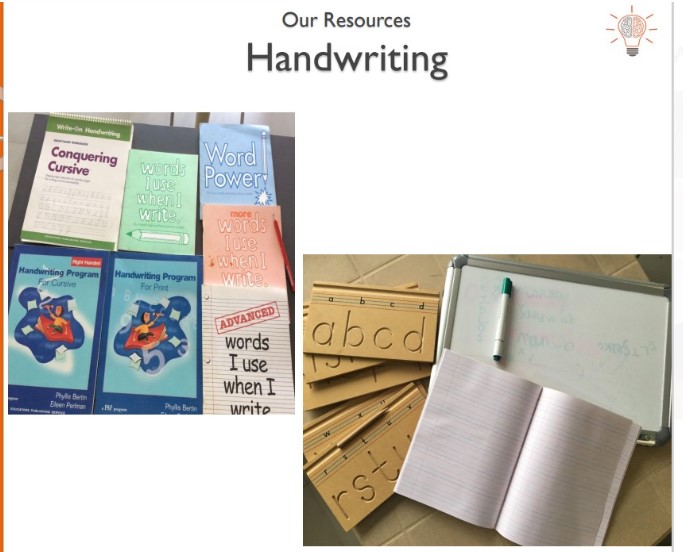
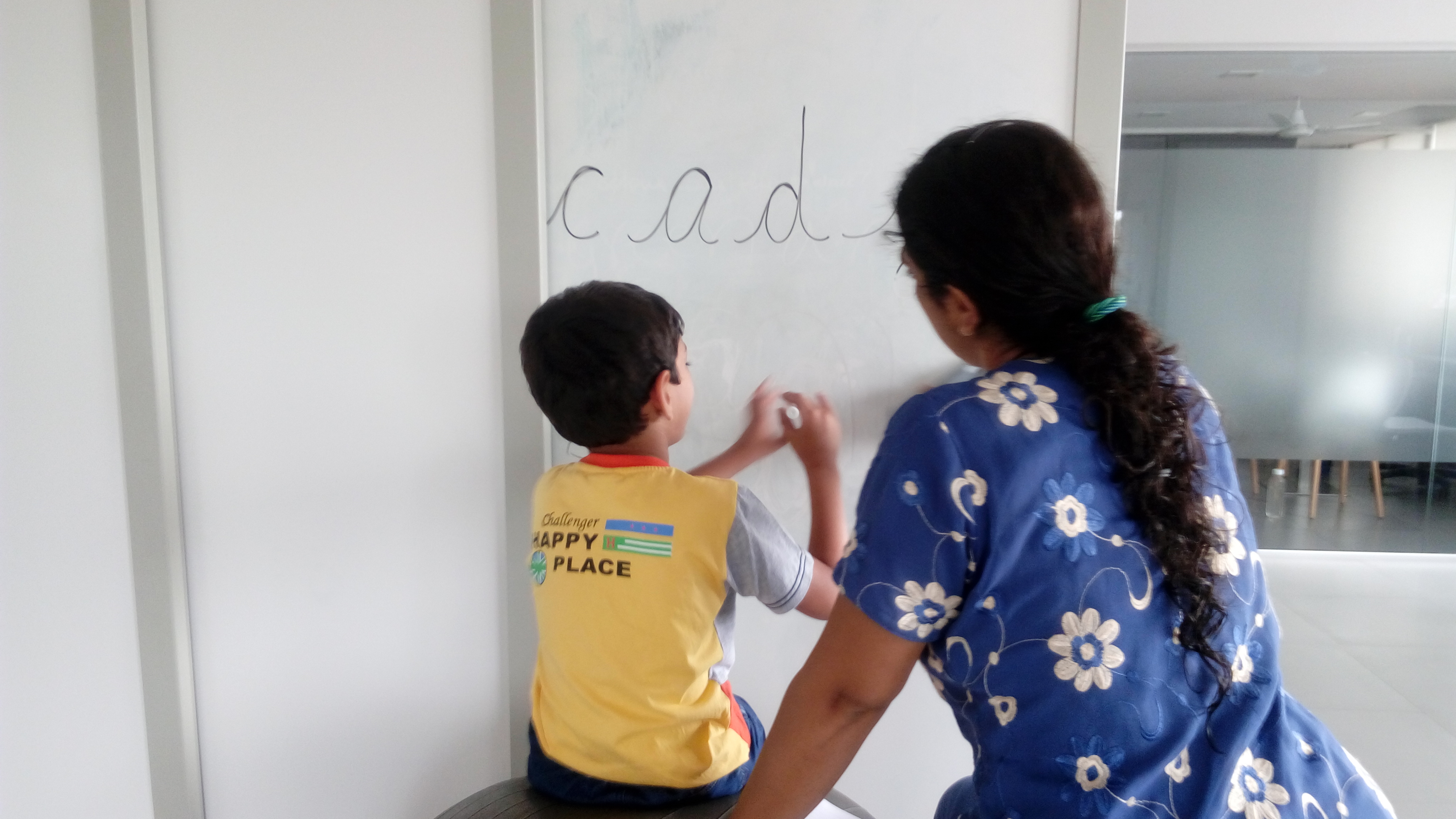
Handwriting

Handwriting is the ability to produce written language clearly, legibly, and efficiently using appropriate letter formation, spacing, alignment, and pressure control. It is a complex skill that integrates fine motor coordination, visual–motor integration, posture, grip, and cognitive processes such as planning and attention.

At BVerve, handwriting remediation is approached as a neuromotor, visual, and cognitive skill, not just writing practice.

Our approach includes:

  • Assessment of underlying skills
    • Posture, pencil grip, fine-motor control, hand strength, bilateral coordination, visual–motor integration, and visual perception are first evaluated.
  • Foundational motor strengthening
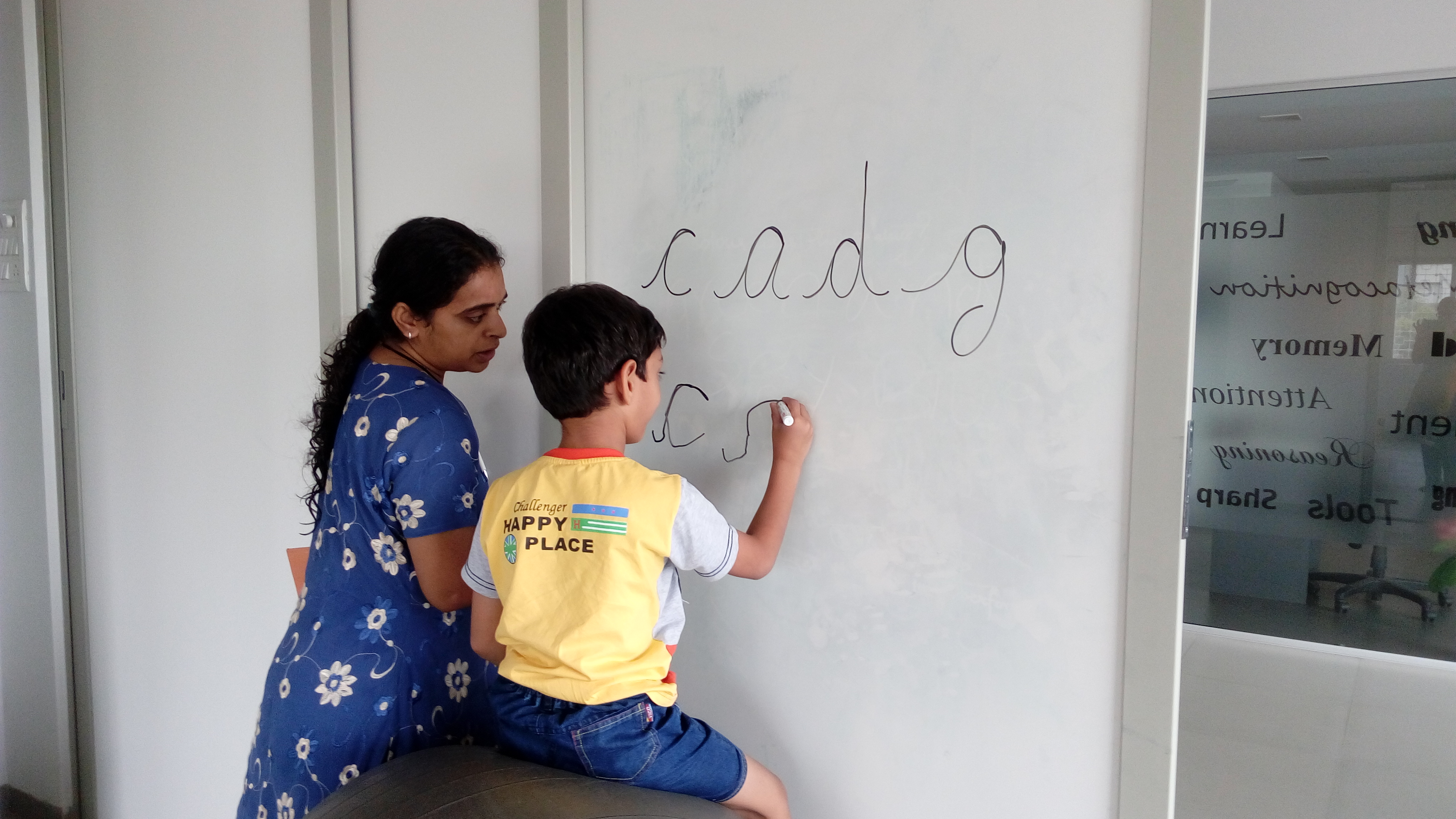
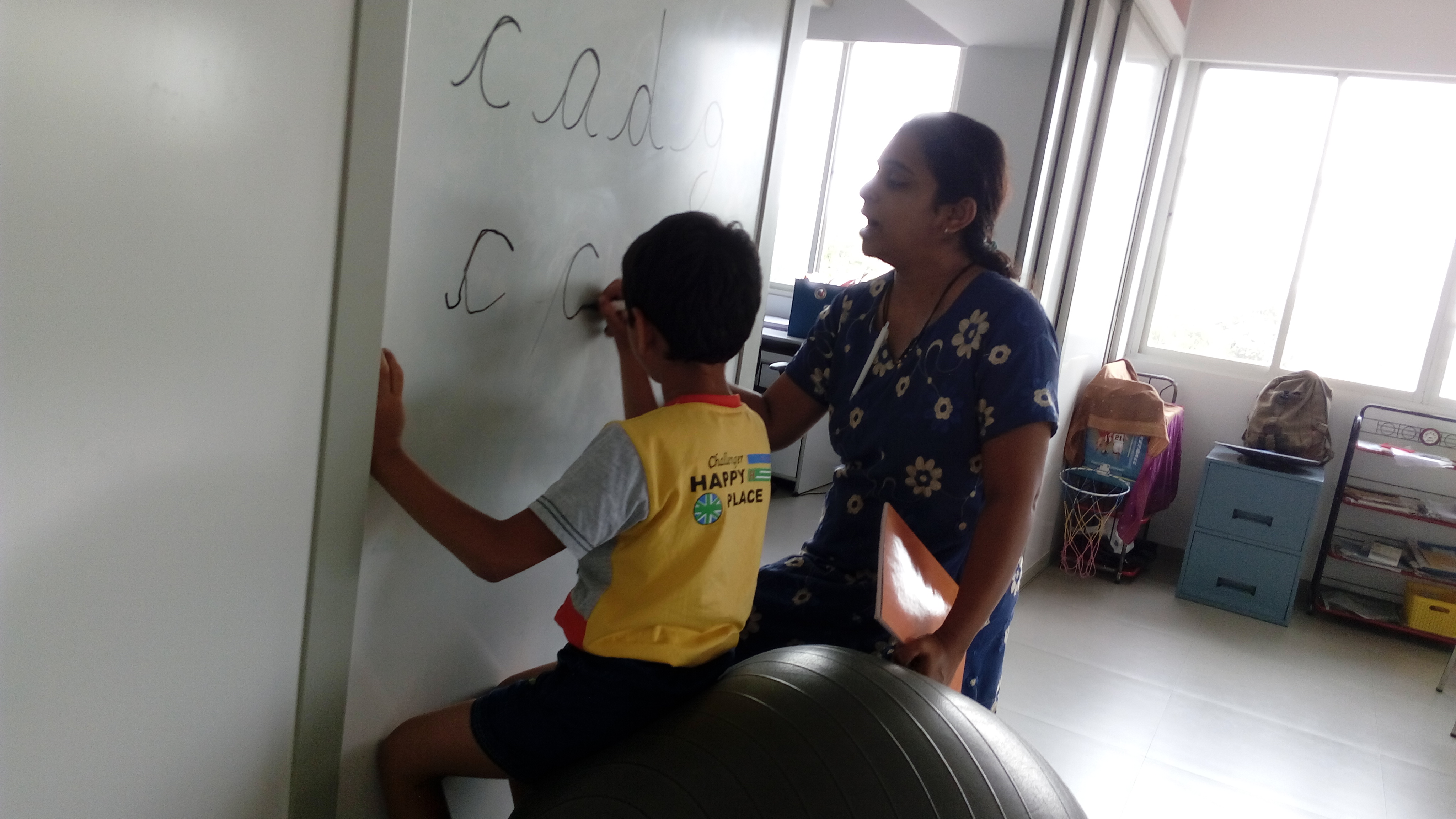
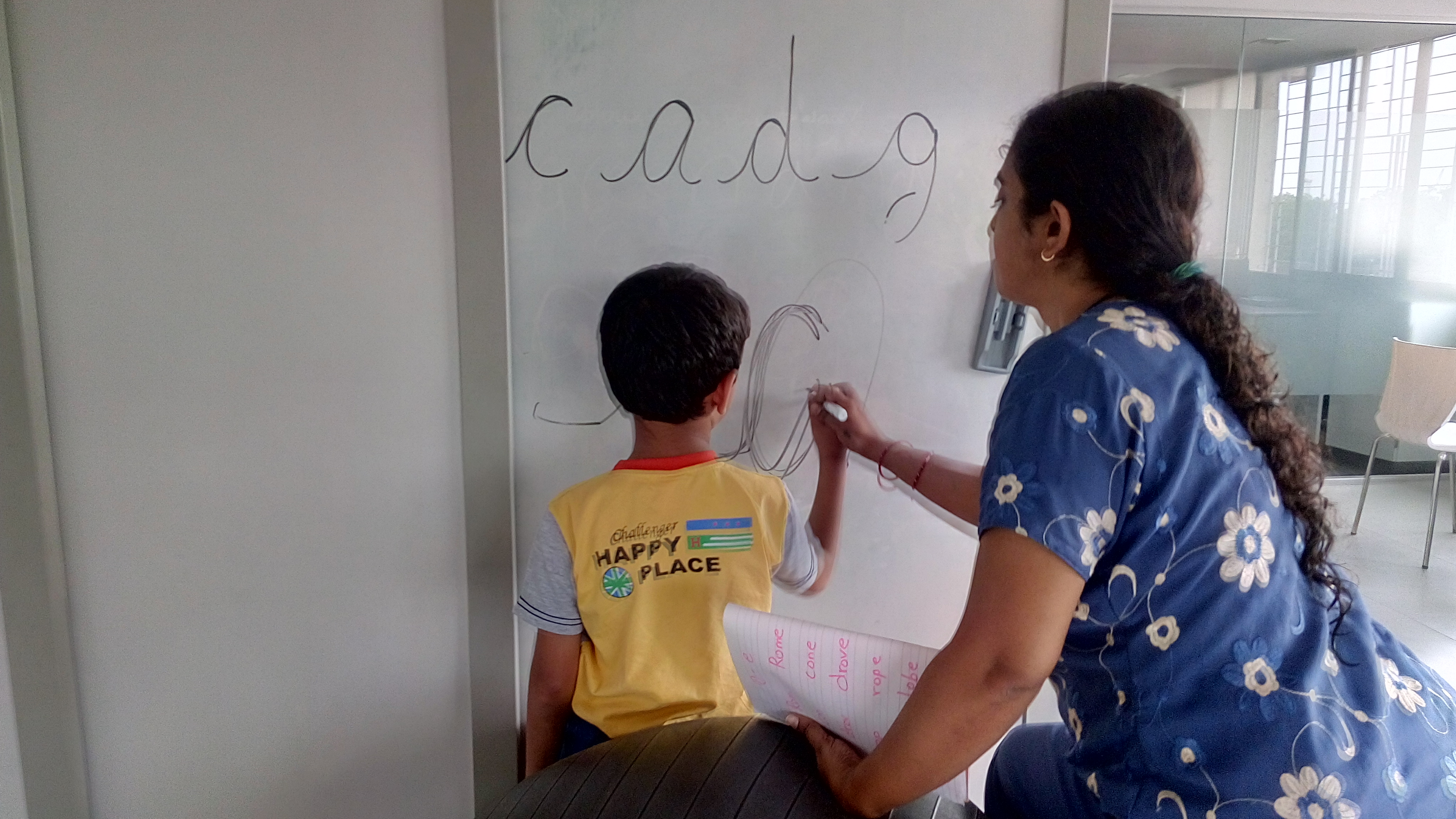
    • Activities target finger strength, wrist stability, shoulder control, and motor planning before moving to paper–pencil tasks.
  • Correct letter formation & directionality
    • Letters are taught systematically with focus on stroke sequence, spacing, size, and alignment.
  • Visual–motor and spatial organisation training
    • We work on spacing between letters and words, line awareness, margins, and page organisation.
  • Speed, fluency & legibility
    • Gradual transition from slow, controlled writing to fluent, functional handwriting for classroom and exam demands.
  • Individualised and grade-appropriate
    • Intervention is adapted for age, academic level, and specific needs (SLD, ADHD, ASD, poor graphomotor skills).

The goal is legible, efficient, and fatigue-free handwriting, enabling the child to focus on content and learning rather than the act of writing

1 Teaching Letter Formation | Fun and Engaging Ways to Learn Writing at BVerve

Children explore how each letter is formed through guided practice, play-based activities, and multisensory learning. Our focus is on helping children develop clarity, control, and confidence in their handwriting.

In this video, you’ll see:

  • Tracing and pattern work — understanding stroke direction and sequence
  • Air writing and sand writing — using movement and touch to reinforce memory
  • Reader’s theatre and storytelling: improving expression and comprehension
  • Creative letter play — forming letters with clay, color, and craft
  • Step-by-step practice — moving from large to small writing for better precision
  • Reinforcement activities — using workbooks and guided writing sheets for mastery

For parents: Simple, playful ways to help your child form letters correctly at home.

For educators: Effective classroom strategies to teach letter formation using visual and kinesthetic methods.

We make handwriting fun and meaningful — helping every child learn to write with confidence, one letter at a time!

2 Developing Handwriting Skills | Fine Motor and Writing Readiness at BVerve

Handwriting is more than putting pencil to paper — it’s about building fine motor strength, visual–motor coordination, and confidence!

Our occupational therapists use multisensory, structured techniques to help children develop control, rhythm, and neatness in their writing.

In this video, you’ll see:

Pre-writing activities: strengthening fingers, wrists, and grip control

Fine motor games: threading, tweezing, clay work, and tracing shapes

Grip correction and posture support: helping children hold pencils comfortably and write with ease

Letter formation practice: tracing, pattern drills, and structured writing tasks

Creative writing readiness: using colors, textures, and play to make writing engaging

For parents: Learn how everyday play can improve your child’s hand strength and writing readiness at home.

For educators & therapists: Observe structured occupational therapy techniques for developing fine motor precision and handwriting fluency.